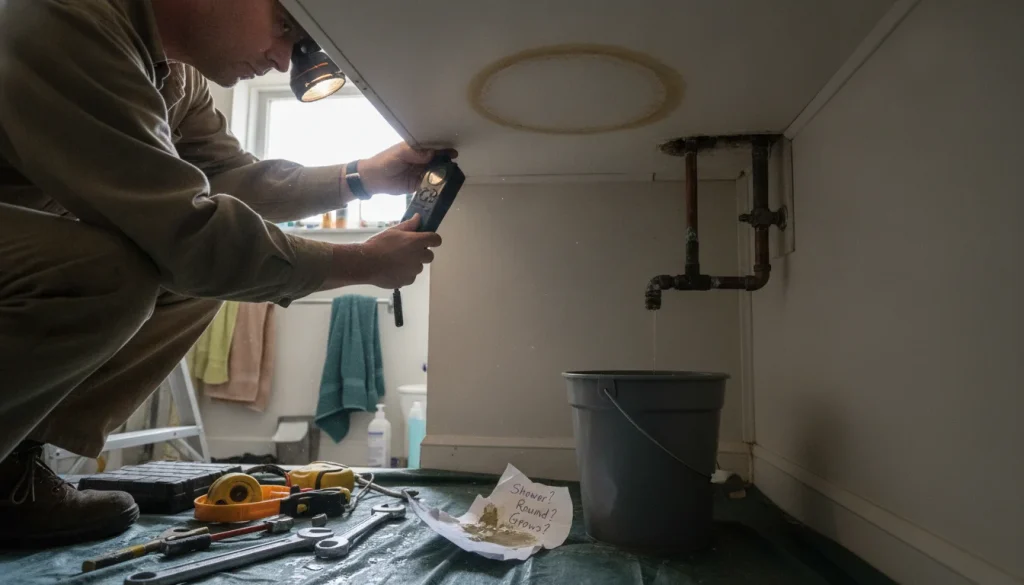
Hidden water leak signs include musty odors, peeling or bubbling paint, warped flooring, unexplained meter movement, and new ceiling stains; recognizing these clues early helps prevent mold and structural damage. If you notice more than one symptom in the same area, especially alongside a moving meter, arrange professional leak detection promptly.
Worried a small stain or smell means trouble at your place in St. Joseph? This guide explains how to interpret the clues, run simple at‑home tests, and decide when to call St. Joseph Plumber for skilled leak detection and repair.
Table of Contents
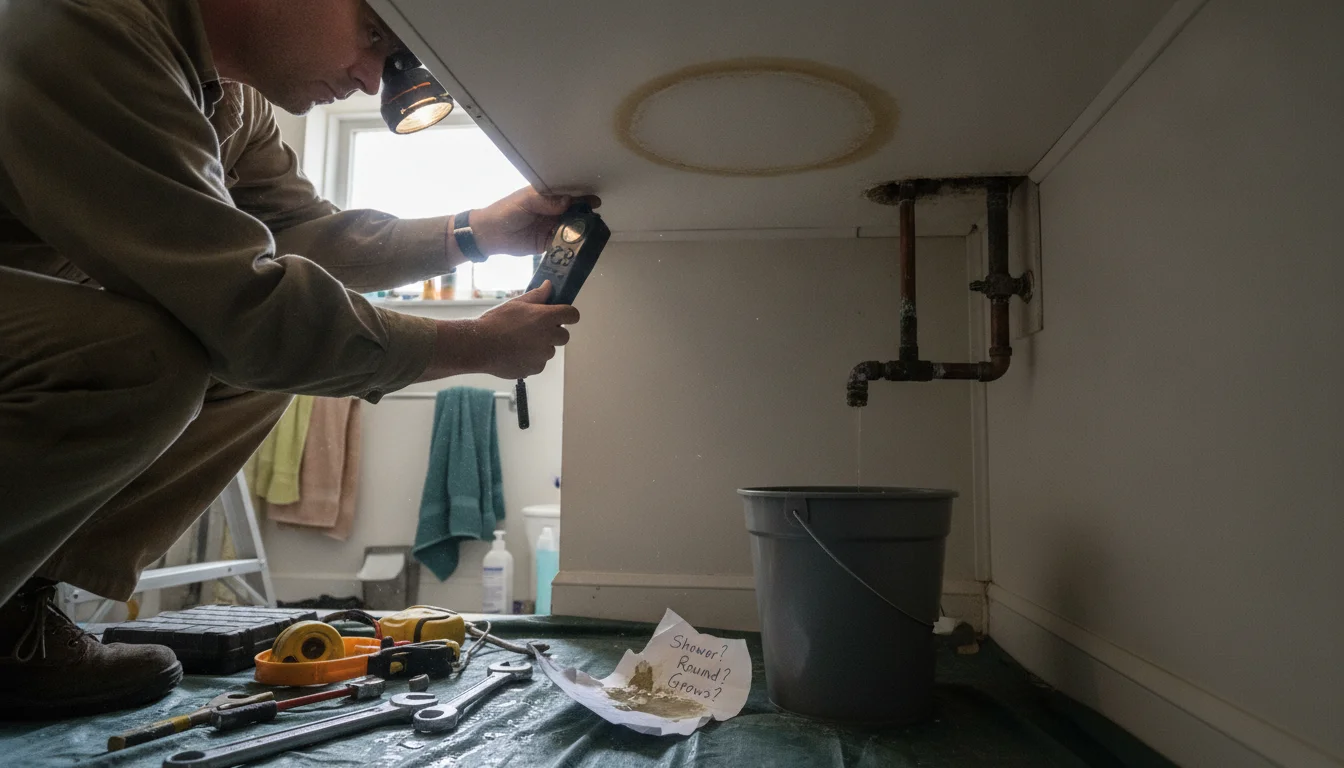
- What are hidden water leak signs, and why do they matter?
- How can you tell there’s a leak behind a wall?
- What hidden water leak signs show up under floors?
- Are ceiling stains the only warning of a leak above?
- Which sounds and smells point to a concealed leak?
- Can your water bill or meter confirm a hidden leak?
- What health and safety risks come with hidden moisture?
- Which DIY tools and tests help locate hidden moisture?
- When should you call a licensed plumber—and what will they do?
- How do you prevent hidden leaks and limit water damage long-term?
- Frequently Asked Questions
- Key takeaways
- Conclusion
What are hidden water leak signs, and why do they matter?
Hidden leaks are water losses you cannot see at a glance. They lurk in walls, beneath floors, above ceilings, and under slabs. Early giveaways include musty smells, curling or peeling paint, dark or expanding stains, warped wood, and a meter that turns when no fixtures are running. These clues mean water is moving and needs fast attention.
A hidden leak is any water escape from pipes, valves, or fixtures that is not visible at the surface. It may be slow, like a pinhole in copper, or sudden, like a split supply line. Slow leaks saturate building materials over time. Drywall softens. Insulation holds moisture. Wood swells. This creates conditions ripe for mold and wood decay.
Small leaks become big problems because water follows gravity and wicks through porous materials, sometimes traveling far from the source. A tiny drip can stain a baseboard, lift tile, or trip a GFCI outlet. Hidden issues often present mixed signals: a musty hall closet, a warm spot on a slab, or a fresh hairline in paint. Track patterns—not one‑off events.
Why it matters: damage accelerates once materials get wet. Mold can start on damp drywall within a couple of days. Studs lose stiffness. Floors cup. Wiring corrodes. Repairs can jump from patching to opening walls, running drying equipment, and full rebuilds. Early action keeps the scope smaller.
If you suspect a leak at your home or business in St. Joseph, note the signs, run a quick meter test, and call a licensed plumber if results indicate flow. St. Joseph Plumber serves St. Joseph regularly with emergency plumbing, leak detection, and pipe repair to stop damage at the source.
What counts as a hidden leak and its early signals
Hidden leaks include pinholes in supply lines, worn valve stems, cracked fittings, sweating on cold lines, and drain seepage at joints. Early indicators are subtle: a faint mark that grows, paint that bubbles, grout that remains dark, or plank edges that lift.
How small leaks escalate into major damage
Moisture migrates, weakens adhesives, fuels mold, and corrodes fasteners. With time, minor cosmetic issues become structural repairs that take longer and cost more to correct.
How can you tell there’s a leak behind a wall?
Wall leaks often reveal themselves at the surface first. Watch for lifting or blistering paint. Drywall can bulge, feel soft, or crumble at corners. Light tan or brown rings may appear. Baseboards can swell or separate. In tiled baths, grout may darken and stay wet long after a shower ends.
Touch suspect areas. Are they cool or damp? Press gently. Soft drywall points to water in the cavity. Run a clean, dry tissue along the baseboard seam. If it picks up moisture, mark the spot. Track whether the stain grows after a shower or washer runs. Patterns help pinpoint the source zone.
Rule out surface condensation. Cold lines can sweat in humid rooms; that exterior condensation can wet drywall. Improve airflow and see if the area dries. If not, consider a leak behind the wall.
You can also listen. A faint hiss can indicate pressurized water passing through a small opening. A drip can echo in a hollow wall. Turn off nearby fixtures and stand quietly. Mark any sound you hear.
Visual and tactile clues on drywall and paint
- Bubbling or peeling paint that returns after drying
- Soft drywall that dents with light finger pressure
- Linear stains that follow studs or seams
- Swollen baseboards or gaps at shoe molding
- Persistent grout discoloration near tub surrounds
Simple shutoff and meter checks for wall leaks
Do a quick test:
- Turn off all fixtures and appliances that use water.
- Note the water meter reading. Some meters have a small leak dial that spins with tiny flows.
- Wait 20–30 minutes with no water use.
- Recheck the meter. Any movement suggests a leak.
- To isolate, close the main house valve. If the meter still moves, the leak is between the meter and house. If it stops, the leak is inside.
If the meter moves only when a specific valve is open (for example, the cold side to a bath), the problem may sit in that run. Share your notes with a licensed plumber for a faster diagnosis.
What hidden water leak signs show up under floors?
Floors can hide a lot. Water beneath hardwood can make boards cup or crown, gaps form between planks, and finish crack. Tile may loosen, grout can crumble, and hairline fissures can spread. On vinyl or laminate, edges can lift or bubble. A floor that feels spongy or hollow signals trouble below.
On a concrete slab, a warm spot can indicate a hot‑water line leak. A cold, damp patch can trace back to a cold‑water line. In some cases, you may hear faint running when rooms are quiet. Doors may stick as subfloor swells. Rugs can stay damp around the edges.
In kitchens, dishwashers and fridges with water connections are common sources. In baths, a failing wax ring at the toilet can leak slowly, soaking the subfloor. Water often follows joists, so visible damage may appear one room away from the source. If you know the direction of the floor framing, use it to guide your search.
Crawlspaces tell the truth. Look under the suspect room with a flashlight. Drips on the underside of subfloor, wet insulation, and new mineral tracks on pipes are strong clues. Work safely: avoid wires and watch for standing water.
Hardwood, tile, and slab indicators
- Hardwood cupping or crowning that does not flatten after dry weather
- Loose or hollow-sounding tile and cracking grout lines
- Vinyl or laminate bubbles near sinks or dishwashers
- Warm or cold spots on slabs, often along pipe runs
Radiant heat and crawlspace red flags
Hydronic radiant heat leaks may appear as uneven warmth, sudden boiler refill needs, or new slab stains. In crawlspaces, look for active drips, rust on metal hangers, and damp insulation batts. Any of these warrant prompt inspection to prevent rot and mold.
Are ceiling stains the only warning of a leak above?
Ceiling stains are common, but they are not the only sign. Sagging drywall, bubbling paint, and seams that start to show can appear first. You may see nail pops or fine cracks that widen. In bathrooms, peeling around the ceiling vent can indicate damp air or a slow leak nearby.
Water can pool above the ceiling before it appears below. Press gently with a knuckle near a stain. If it feels soft or gives, the area may be wet. Do not puncture without a plan; water can pour out quickly. If you must relieve pressure to prevent a collapse, place a bucket first.
New stains after storms could be roofing issues. Stains that grow after someone showers may indicate a plumbing leak. Track timing. If the mark grows only with fixture use, suspect piping. If it expands with rain, suspect roofing or flashing problems.
In multi‑story homes, check the room above. Look beneath tubs, around toilets, and near laundry units. A loose supply line or failed caulk can allow water to intrude. Small drips over time can create broad stains below.
Sagging drywall, bubbling paint, and seam lines
- Sagging or pillowy drywall suggests pooled water above
- Bubbles in paint that return soon after drying
- Sharp seam lines where joint tape lifts or splits
- Rusted ceiling fixtures such as fan housings or can lights
Attic clues and telling roof vs. plumbing leaks apart
In attics, look for wet decking, rusty nails, or damp insulation. Roof leaks often leave dark trails from high to low points. Plumbing leaks usually appear near vent stacks or runs below bathrooms. If the stain is round and grows after a shower, plumbing is likely. If it follows rafters and shows after rain, roofing is suspect.
Which sounds and smells point to a concealed leak?
Your nose and ears are powerful tools. A new musty smell in a closet, bath, or under a sink can be the first hint of trouble. Musty means mold is feeding on damp material. If odors intensify after running a shower or washer, focus on those lines. Smells that linger after cleaning hint at hidden moisture.
Listen for dripping, hissing, or running‑water sounds when no fixtures are on. Drips can echo in wall cavities. Hissing often signals pressurized leaks on supply lines. A faint whoosh near a slab can indicate a broken line under concrete.
Smells from drains can complicate things. Sewer gas has a sulfur note and often relates to vent or trap issues rather than a fresh‑water leak. But a failed wax ring can leak both water and gas. Treat both as urgent.
Mold growth may appear as speckles on paint, dark patches on caulk, or fuzzy areas on drywall. Hidden mold can still release spores and volatile organic compounds (VOCs). VOCs are gases from molds and materials that can irritate airways and eyes. Reducing moisture is the solution.
Dripping, hissing, and running-water noises
- Dripping in walls or ceilings after fixtures are off
- Hissing from pressurized line leaks, often steady
- Running‑water hum at the meter with no use indoors
Musty odors, mold growth, and VOCs
A steady musty odor, visible mold spots, or headaches that improve outdoors can point to hidden moisture. Air out the space, locate and fix the water source, and dry the area fully to stop growth.
Can your water bill or meter confirm a hidden leak?
Yes. Your water meter is a reliable truth teller. When no one is using water, the meter should be still. If it moves, water is flowing somewhere. Many meters have a small leak dial that spins even with tiny flows. A steady slow spin suggests a small, constant leak.
Bills help too. Look for usage that climbs month to month without a clear reason. Seasonal changes can explain some variation—summer irrigation, for example. But winter spikes indoors are not typical. Compare similar months year over year when possible.
Meters can also help isolate issue zones. Close valves to suspect fixtures and watch the dial. If the dial stops, that branch is the culprit. Toilets are frequent offenders. Next on the list are hose bibs, ice maker lines, and water heaters.
Step-by-step water meter test
- Turn off all indoor and outdoor water use.
- Find the small leak dial on the meter. Note its position.
- Wait 20–30 minutes. Do not run water.
- Check the dial again. Any movement signals a leak.
- To confirm, close the main valve to the home. If the meter still moves, the leak is in the service line from meter to home. If it stops, the leak is inside the home.
Reading bill patterns and seasonal usage
Scan for sudden spikes without new appliances or guests. Match higher use to known events like yard watering. If usage remains high across seasons, a hidden leak is likely. Share bill copies with your plumber; patterns can speed up the find.
What health and safety risks come with hidden moisture?
Hidden moisture harms buildings and people. Mold flourishes on damp drywall and wood. It can aggravate allergies, worsen asthma, and irritate eyes and skin. Children, older adults, and those with respiratory conditions feel the effects first. Keeping materials dry is the essential defense.
Indoor air quality declines when mold grows or when materials stay wet. Odors linger. VOCs from wet building parts and mold add to the load. Fresh air helps, but drying the structure is crucial. Fans alone do not solve the source; the leak must be corrected.
Wet areas also create slip hazards. Water on tile or vinyl can be hard to spot until someone steps on it. Towels are a temporary stopgap at best. Find and fix the leak.
Water and electricity are a dangerous mix. Moisture near outlets, junction boxes, or fixtures can cause shorts or shocks. Turn off power to wet zones at the breaker if you suspect water intrusion, and have a professional inspect before restoring power.
Wood rot and rust weaken support over time. Joists, subfloors, and wall studs can lose strength. Metal hangers and nails can corrode. Early drying and repair prevent heavier structural work later.
Mold exposure, allergens, and indoor air quality
- Allergy flare‑ups and musty odors after water use
- Visible mold spots or black/green staining on walls or ceilings
- Persistent humidity that does not respond to ventilation
Electrical hazards, rot, and slip risks
If you see water near outlets or lights, switch off power to that circuit. Use caution around wet floors. Arrange for professional leak detection, structural drying, and safe repairs to restore the area.
Which DIY tools and tests help locate hidden moisture?
Homeowners can complete a few safe checks. A basic moisture meter can scan drywall, baseboards, and trim. Readings that jump higher than other areas mark a wet zone. A simple infrared thermometer can highlight cooler spots from evaporation or warmer spots over hot‑water line leaks.
Dye tablets help test toilets. Add a few drops to the tank. If the bowl picks up color without a flush, the flapper leaks. You can also place dry salt paper (plain tissue with table salt) along baseboards. Salt clumps when damp, marking a moisture path.
A proper pressure test can be performed by a licensed plumber with a gauge and pump. DIY pressure work is not recommended for most people. Over‑pressurizing can damage lines. Leave full pressure tests to professionals.
Thermal imagers are useful but require interpretation. Cold air washing a wall can look like a wet spot. Use them with a moisture meter to confirm. Scan, mark, and compare to known dry areas for a clearer picture.
Moisture meters and basic infrared checks
- Moisture meter: compare suspect areas to known dry zones
- Infrared thermometer: find hot or cool anomalies that align with pipe runs
Dye tablets, pressure tests, and salt paper
- Toilet dye test: fast check for silent leaks
- Salt paper at trim: simple dampness detector
- Pressure testing: ask a licensed plumber for safe, accurate results
When should you call a licensed plumber—and what will they do?
Call a licensed plumber when you have more than one sign, any meter movement at rest, active drips, ceiling bulges, or smells that will not clear. Also call if water reaches electrical parts, if floors sag, or if you have an urgent burst or spray. Delays increase repair needs.
A professional will ask key questions: when you first noticed the issue, what changes when fixtures run, and what your meter tests show. Share photos and notes. This shortens the search.
Pros use methods that minimize damage. Acoustic listening tracks leak sounds in walls. Thermal imaging maps temperature shifts. Moisture mapping shows the spread. For slab leaks, line tracing and pressure isolation narrow the zone. Some cases need a small, targeted opening to confirm.
Repairs match the cause. Pinholes in copper can be cut out and replaced. Older sections may be repiped. PEX or copper may be used based on code and conditions. For drain issues, joints or traps may be rebuilt. After the fix, drying gear such as air movers and dehumidifiers brings materials back to safe levels.
Service options include Emergency Plumbing for urgent bursts, Leaks & Burst Pipes for detection and repair, and Water Heater Repair when hot water lines or tanks leak. For safety issues with appliances, Gas Line Plumbing ensures code‑compliant work.
Urgent thresholds and decision points
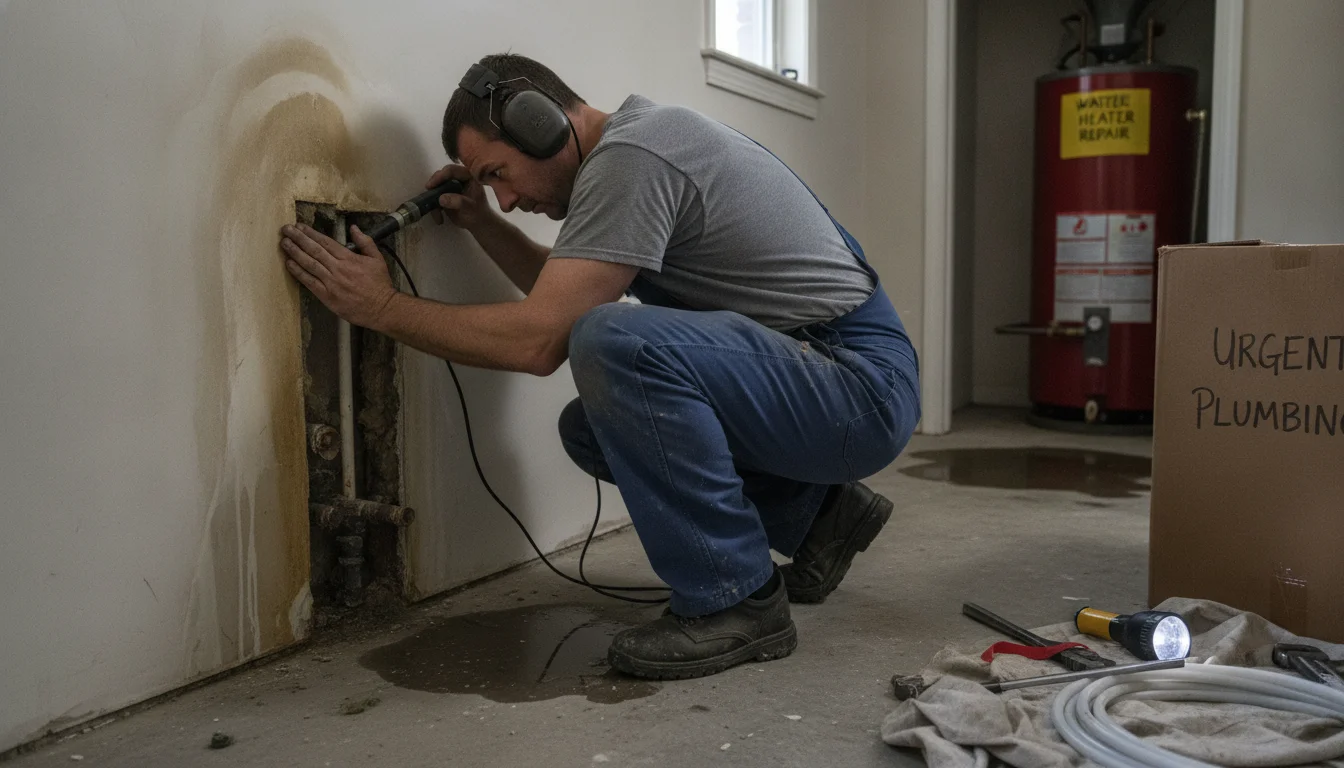
- Any ceiling sag or active drip: urgent
- Meter spins with all fixtures off: call soon
- Water near outlets or panels: cut power and call now
Professional leak detection methods and repairs
Expect non‑invasive tools first, targeted openings only as needed, and a clear repair plan. Pros test after repairs to confirm the leak is resolved before closing.
How do you prevent hidden leaks and limit water damage long-term?
Prevention starts with routine checks. Look under sinks monthly. Feel for dampness. Inspect around toilets, tubs, and showers. Watch for slow drains that may push water into places it should not go. Replace brittle supply lines with braided stainless hoses. Add shutoff valves where missing.
Keep water pressure within a safe range. High pressure strains pipes and fixtures. A plumber can test and install a pressure‑reducing valve if needed. Insulate pipes in unheated spaces to prevent winter bursts. Seal wall and floor penetrations to keep moist air from condensing on cold pipes.
Choose durable materials when you update. Use quality valves, fittings, and approved pipe types. Set water heaters to safe temperatures to protect lines and reduce scald risk. Service heaters per manufacturer guidance to help prevent tank leaks. If your home has known problem piping, plan a repipe before leaks force the issue.
Document issues for insurance. Take clear photos of damage, meter tests, and repairs. Keep receipts. Know where your main shutoff is and teach others in the home. Build a simple emergency plan for bursts: shut water, move valuables, and call for help.
Maintenance checklist and better material choices
- Monthly checks under sinks and at appliances
- Annual inspection of supply lines, valves, and water heater
- Replace worn hoses with braided stainless
- Insulate pipes in attics, crawlspaces, and exterior walls
Insurance documentation and emergency readiness
Keep a folder with photos and notes. Mark the main shutoff. Store towels, a flashlight, and a basic tool kit in one spot. Quick action limits damage.
Frequently Asked Questions
What should I do first if I find a new ceiling stain?
Turn off water to fixtures above the stain if you can. Place a bucket under any sag. Do not poke holes without a plan. Do a quick meter test to check for flow. If the stain grows or the meter moves, call a licensed plumber for leak detection.
How can I tell if a toilet is leaking without tools?
Put a few drops of food coloring or a dye tablet in the tank. Wait 10–15 minutes without flushing. If color shows up in the bowl, the flapper leaks. Silent toilet leaks are common hidden water leak signs and can raise your bill.
Are musty odors always from a water leak?
Not always. Humidity, poor ventilation, or old carpet can smell musty. But a new musty odor near walls, closets, or baths often points to hidden moisture. Use a moisture meter on trim and drywall to compare. If readings are high, investigate further.
Can a water heater cause hidden leaks?
Yes. Tanks can seep at fittings, valves, or the tank body. Small leaks may run into a pan and go unnoticed. Watch for rust marks, damp pans, or clicking sounds. Water Heater Repair can address tank or connection issues before they become major damage.
Who should I call for a burst pipe emergency?
Call a licensed plumber with Emergency Plumbing service. Shut off the main water valve first. Open a faucet to relieve pressure. Move items away from the leak. Pros can stop the water, repair lines, and set drying steps to protect your home.
Key takeaways
- Early clues matter: stains, smells, sounds, and meter movement point to leaks.
- Simple tests help: shutoffs and meter checks can confirm hidden flow.
- Act fast: quick response limits mold, rot, and repair scope.
- Pros have tools: non‑invasive detection finds the source with less damage.
- Prevention works: routine checks, better materials, and clear plans reduce risk.
Conclusion
Hidden leaks start small but can harm your home quickly. Use the signs and tests here to spot problems early, then bring in a licensed pro to confirm and fix. For trusted help in St. Joseph and throughout the surrounding area, St. Joseph Plumber is ready to find and repair the source, protect your structure, and restore safety. Contact us.
St. Joseph Plumber in St. Joseph supports homeowners, businesses, and property managers with leak detection, pipe repair, and water heater services across the local community.