A toilet keeps running when water leaks from the tank into the bowl or the fill valve will not shut off. Common causes include a worn flapper, high water level, loose chain, or bad handle. You can check these parts safely, but St. Joseph Plumber can help when simple fixes do not stop the flow.
A running toilet may seem like a small issue. Still, it can waste water, make noise, and show that a toilet part needs care. Many cases are easy to understand. A careful check can show whether you need simple upkeep or professional toilet repair.
Table of Contents
- Why does my toilet keep running?
- Is the flapper causing the toilet to keep running?
- Could the toilet fill valve be the problem?
- How do you check the toilet's water level?
- Can a running toilet cause water damage or higher bills?
- Can a flush handle, chain, or lift arm cause a running toilet?
- Why does a toilet run intermittently?
- How can you fix a toilet that keeps running?
- What should you do if the toilet still runs after repairs?
- When should you call a professional plumber for a running toilet?
- Key takeaways
- Frequently Asked Questions
- Conclusion
Why does my toilet keep running?
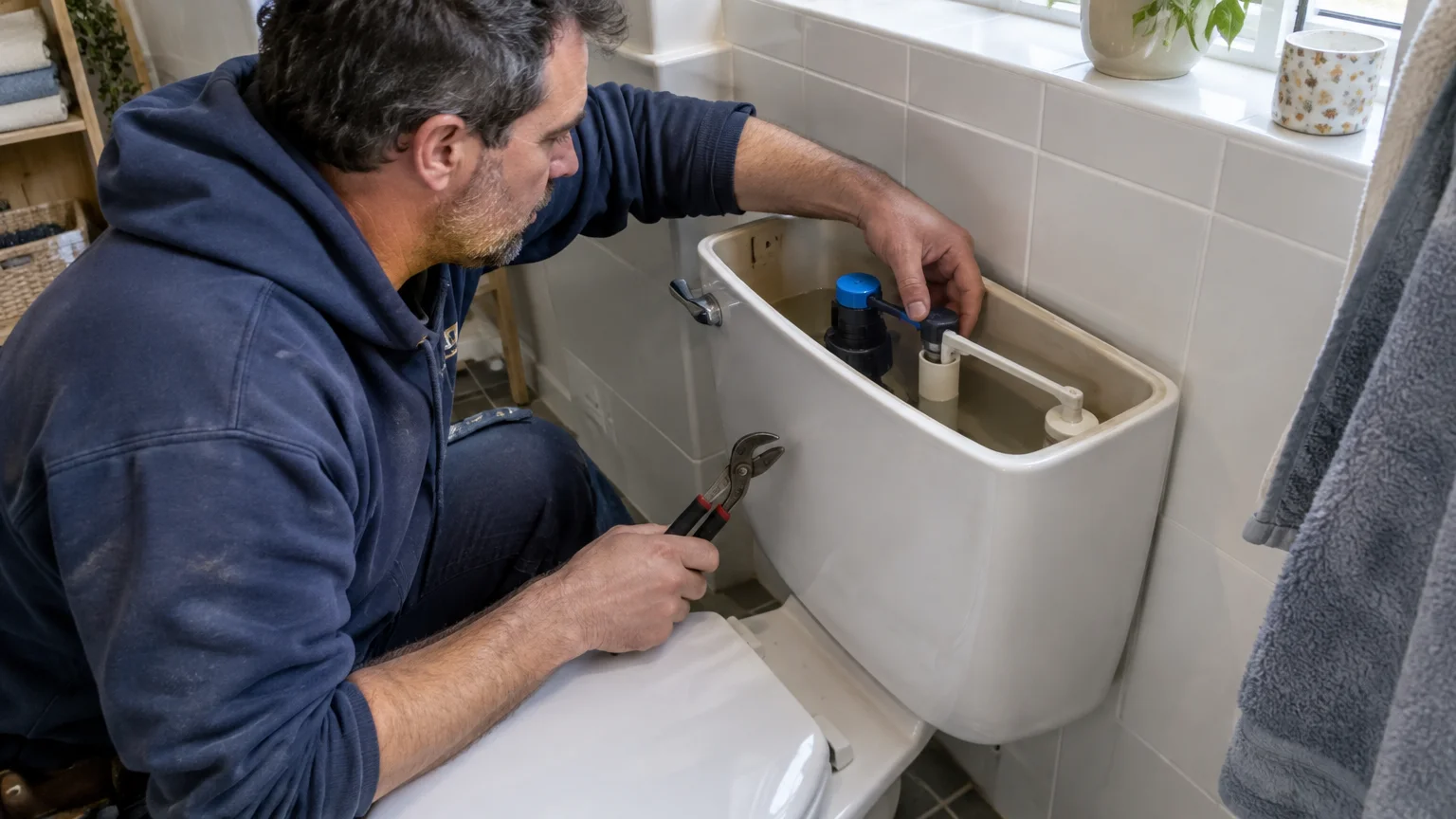
A toilet keeps running when water keeps moving from the tank into the bowl. It can also happen when the fill valve keeps adding water. The flapper, fill valve, float, chain, and handle must work together. A small fault in one part can keep the full system running.
How a toilet should stop running after flushing
When you press the handle, the chain lifts the flapper. The flapper is the rubber seal at the bottom of the tank. It lets tank water enter the bowl. After the tank drains, the flapper should drop back onto its seat.
The fill valve then sends clean water into the tank. The float rises with the water. When the water reaches the right level, the fill valve should close. The tank should become quiet, and the bowl should stop getting more water.
The most common reasons a toilet continues to run
A worn flapper is one of the most common causes. Mineral buildup may also stop the flapper from sealing well. Other causes include a float set too high, a short chain, or a handle that does not return to its normal place.
Start by removing the tank lid and watching one full flush. This check may show water flowing over the overflow tube or leaks below the flapper. In St. Joseph, older homes may have more than one worn toilet part after years of use.
Is the flapper causing the toilet to keep running?
The flapper may be the cause if water moves slowly into the bowl after flushing. It should sit flat and make a tight seal. If it is cracked, stiff, bent, or covered with buildup, water can pass around it.
How to inspect the flapper for damage or poor sealing
First, close the toilet shutoff valve. You can usually find it near the wall or floor behind the toilet. Flush once to lower the tank water. You can then inspect the flapper without water spraying from the supply line.
Look for tears, hard rubber, missing tabs, or a loose connection. Check the hinge points and the seat below the flapper. The seat is the smooth area where the rubber seal rests. Dirt or mineral deposits there may leave a small opening.
A dye test can help find a slow leak. Put a little food coloring in the tank. Do not flush. If colored water appears in the bowl after a short wait, water is passing through the flapper or its seat. Clean the bowl after the test if needed.
When cleaning or replacing the flapper can solve the problem
Cleaning may help when the flapper is still soft and only has light buildup. Wipe the sealing area with care. Do not use sharp tools because they can scratch the seat. If the rubber feels hard or breaks when touched, replacement is usually the better choice.
The new flapper must fit the toilet design. Some toilets use a standard rubber flapper. Others use a special seal or a canister-style part. A part that looks close may still fit badly. St. Joseph Plumber can help homeowners in St. Joseph find the right repair when a new flapper does not seal.
Could the toilet fill valve be the problem?
The fill valve may be faulty when the toilet hisses, refills without a flush, or sends water into the overflow tube. This valve controls water entering the tank. It should close when the float reaches the set level.
Signs of a faulty or noisy fill valve
A noisy valve may have a worn seal or a blocked screen. Some valves vibrate or make a sharp squeal while water enters. A valve that runs for a long time after each flush may also need repair.
Watch the tank as it fills. If water rises above the marked line and flows into the overflow tube, the float may be set too high. If the water reaches the correct level but the valve keeps running, the valve may not be closing.
A supply line problem can also affect the fill. A partly closed shutoff valve may cause weak flow or odd sounds. A bent supply line can do the same. Use care because forcing an old valve can cause a leak.
How fill valve adjustment differs from replacement
Adjustment changes the height where the float tells the valve to stop. Many models have a screw, clip, or sliding part. Make small changes at a time. Test the tank after each change.
Replacement means removing the old valve and fitting a new one. Turn off the water first, then drain the tank. Tighten the connection below the tank with care. Too much force can damage the porcelain or the supply connection.
A homeowner may safely adjust an easy-to-reach float or replace a familiar part. A professional plumber is a better choice when the valve is rusty, the shutoff does not work, or the tank connection starts to leak.
How do you check the toilet's water level?
The water should usually sit below the top of the overflow tube and near the marked fill line. The correct mark can vary by toilet model. Water that sits too high may flow into the bowl without a normal flush.
Where the water level should sit in the tank
Remove the tank lid and look for a line on the inside wall. If there is no line, keep the water below the top of the overflow tube. This open pipe keeps the tank from filling too far.
The tank should fill without water spilling over the tube. After the valve shuts off, the surface should stay still. Water moving in the bowl can signal a leak, even when the tank level looks normal.
Set the tank lid flat after checking the parts. A loose lid does not often cause a running toilet, but it can hide the sound. Removing the lid makes the parts easier to watch.
Why an incorrect float setting causes continuous running
A float set too high lets the tank fill past the right level. Water then enters the overflow tube and flows into the bowl. The fill valve keeps working because it never gets the signal to close.
A float set too low may cause a weak flush. The toilet may need another flush, which adds wear and can hide the true problem. The setting should allow a full flush without sending water into the overflow tube.
Make only small adjustments. Test the toilet after each one. If the level changes by itself, the float or fill valve may have an internal fault. A professional can also check for a damaged overflow tube or tank fitting.
Can a flush handle, chain, or lift arm cause a running toilet?
Yes. A stuck handle, tight chain, or bent lift arm can hold the flapper open. The toilet may run after flushing or stop only when you move the handle by hand. These parts are simple, but they must move freely.
How to identify a stuck handle or tangled chain
Press and release the handle several times. It should move smoothly and return to its starting place. If it feels loose, stiff, or slow, look inside the tank. The handle arm should not press against the tank wall.
The chain should have a little slack when the flapper is closed. A chain that is too short can hold the flapper open. A chain that is too long may slip below the flapper or fail to lift it enough. Remove any tangles and check the hook.
The lift arm should move without hitting the tank lid or other parts. Rust can weaken the arm. A cracked handle may pull unevenly. Replacing a damaged handle is often simple upkeep when the shutoff works and the parts are easy to reach.
What to check when the flapper does not close fully
Watch the flapper through one flush. It should rise, let water pass, and settle on the seat. If it catches on the chain, handle arm, or another part, clear that obstruction before replacing anything.
A flapper may also close badly because it is the wrong size. Some tanks need a specific replacement. A mismatch can leave a small gap around the seat. The chain must also connect to the correct lifting point.
Do not push hard on porcelain parts. Tanks and bowls can crack from force or uneven pressure. If a handle or arm is stuck with rust, professional help may prevent a small repair from becoming a larger leak.
Why does a toilet run intermittently?
A toilet runs intermittently when water slowly leaves the tank and the fill valve turns on to replace it. The refill may happen every few minutes or only a few times each day. This often points to a small flapper leak.
How a slow tank leak creates periodic refilling
The tank level drops when water slips into the bowl. As the level falls, the float drops too. The fill valve then opens for a short time. After the tank fills again, the valve closes. This cycle can repeat without anyone using the toilet.
A leaking flapper is the usual cause. A cracked overflow tube or loose tank fitting can also let water escape. A fill valve with a worn seal may make the same sound. The tank may stay quiet for a long time, so listening alone may not find the problem.
A toilet in a guest bathroom can be easy to overlook. Property owners should check unused bathrooms during regular care. Tenants should report repeated refilling early, before water reaches the floor or causes a larger plumbing problem.
Simple tests for locating a hidden toilet tank leak
A dye test can show whether tank water enters the bowl. Add food coloring to the tank and wait without flushing. Colored water in the bowl confirms that water is crossing the flapper or another inside path.
You can also mark the tank water level with a pencil. Close the shutoff valve and wait. If the level falls, water is leaving the tank. Do not use permanent markers on porcelain. Erase the pencil mark after testing.
Check the floor around the toilet, too. Moisture at the base may point to a seal problem instead of a tank leak. A wet supply connection can also cause trouble. A leak that reaches the floor, wall, or ceiling needs prompt care.
How can you fix a toilet that keeps running?
A homeowner can often fix a running toilet by cleaning the flapper, adjusting the float, clearing the chain, or replacing a worn part. Begin by shutting off the water and looking inside the tank. Safety matters more than speed.
A safe step-by-step troubleshooting process
- Turn the toilet shutoff valve clockwise until water stops.
- Flush the toilet and carefully remove the tank lid.
- Watch the flapper, chain, float, and fill valve during a test.
- Check whether water enters the overflow tube.
- Inspect the flapper for damage, buildup, and a poor seal.
- Adjust the float in small steps if the water level is wrong.
- Test the toilet and check the floor and supply connection.
The shutoff valve should stop water before work starts. If it will not turn, do not force it. An old valve can break or leak around its stem. A plumber can stop the water and replace the valve safely.
Tools and replacement parts commonly needed
Basic work may need a cloth, small bucket, sponge, adjustable pliers, and a replacement flapper. Some repairs need a compatible fill valve, handle, chain, or rubber seal. Choose parts based on the toilet model and tank design.
Avoid harsh chemicals inside the tank. They can harm rubber parts and cause new leaks. Drain cleaners do not fix a running toilet because the fault is usually in the tank, not the bowl drain.
When a repair does not hold after testing, the part may be wrong. Another part may also be worn. Repeated removal can damage connections. At that point, professional running toilet repair is the safer next step.
What should you do if the toilet still runs after repairs?
If the toilet still runs after a flapper or float adjustment, do not replace parts at random. Several worn parts may be working together. The flapper seat, overflow tube, fill valve, shutoff valve, or supply line may need a closer check.
When multiple worn components point to a larger issue
A toilet used for many years may have a hard flapper, weak handle, noisy valve, and rusty bolts at once. Replacing one part may reveal another fault. A full check helps show which parts really need attention.
Water around the tank bolts or base is a warning sign. Cracks in the tank or bowl are more serious. Porcelain may fail without much warning, especially after force. A damaged fixture may need professional advice before anyone uses it again.
A slow leak may also come from the connection between the tank and bowl. Tightening the bolts too much can crack the porcelain. Handle these parts with care instead of treating them like metal pipes.
Why shutoff valve or supply problems need professional attention
The shutoff valve controls water to the toilet. If it will not close, leaks near the handle, or stays partly open, the supply connection may need work. Water can escape quickly when an old valve fails during a repair.
Do not twist or sharply bend the flexible supply line. Do not keep a damaged line in use. A loose nut can leak at the wall or tank. Dry the connection and check it again after water returns.
Professional help is also wise when the bathroom has damaged flooring, a ceiling stain below it, or a toilet that rocks at the base. St. Joseph Plumber can assess homes and small businesses around St. Joseph, including Downtown St. Joseph, Lakeshore Drive, Benton Harbor, Stevensville, Fair Plain, Shoreham, and nearby communities.
Can a running toilet cause water damage or higher bills?
Yes. A running toilet sends water through the fixture longer than needed. This can raise water use, create noise, and wear out toilet parts. A leak at the base or supply line can also harm flooring and nearby materials.
How ongoing water flow affects the bathroom and plumbing system
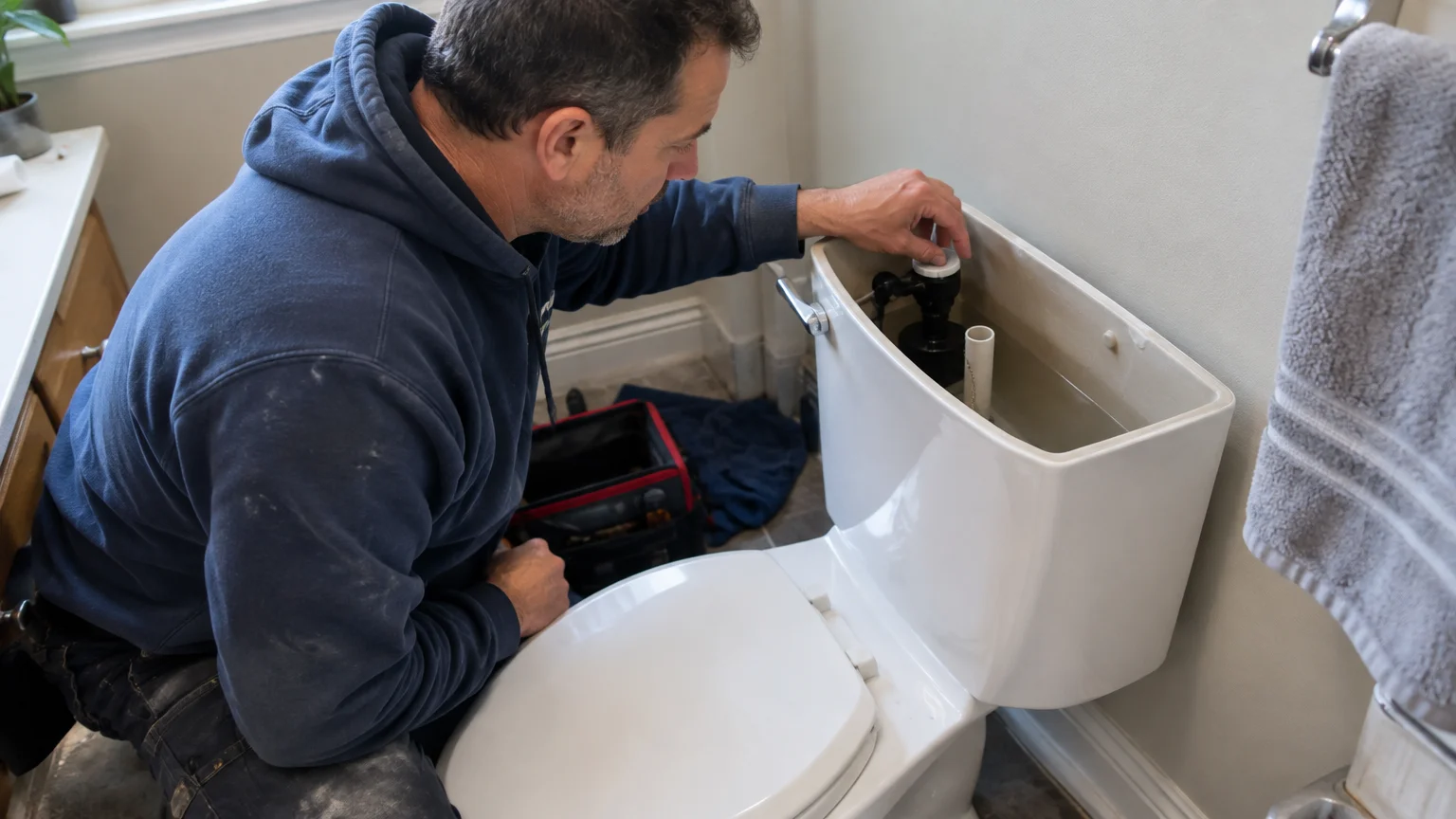
Water moving through the bowl can stain surfaces and leave mineral marks. A constant refill can make the bathroom sound active when no one is using it. In a busy home or business, the issue may continue for hours before anyone notices.
Moisture outside the toilet is a separate concern. Water around the base can reach flooring under the fixture. It may also spread into a wall or ceiling below. Drying the area does not fix the source, so the leak should be checked.
A running toilet does not usually mean the main drain is blocked. Still, a weak flush, bowl backup, and running tank may happen together. If the bowl rises or drains slowly, drain cleaning may be needed along with tank repair.
Warning signs that the problem has become urgent
A homeowner should seek prompt plumbing service when these signs appear:
- Water leaks from the tank, supply line, or shutoff valve.
- The toilet rocks, cracks, or moves at the floor.
- The bowl rises near the rim during a flush.
- A wall or ceiling below the bathroom shows a new stain.
- The shutoff valve will not stop the water.
- The toilet keeps running after several careful repairs.
If the shutoff valve works, close it until help arrives. If the valve fails, you may need to close the home's main water supply. A plumber can then find the source and help protect the nearby area.
When should you call a professional plumber for a running toilet?
Call a professional when basic checks do not solve the problem, water cannot be shut off, or the toilet leaks outside the tank. Prompt service can also help when the toilet affects a business, rental, or occupied property.
Situations that require prompt plumbing service
Call a professional when water reaches the floor, wall, ceiling, or an electrical area. The same applies to a cracked toilet, broken supply line, failed shutoff valve, or bowl that may overflow. These problems can harm more than the fixture.
A plumber is also useful when a replacement part does not fit. Toilet tanks vary by age, brand, and design. The wrong flapper or fill valve may seem to work but still leak. Correct testing can prevent repeated repairs.
Property owners should keep notes about repeated problems. Record noise, refill timing, water around the base, and past repairs. These details can help the plumber work faster. Tenants should tell the property manager before making changes.
What a plumber checks when basic troubleshooting does not work
A plumber checks the tank parts, flapper seat, water level, overflow tube, handle, chain, supply line, and shutoff valve. The inspection may also include the bowl seal and floor around the fixture. The goal is to find the source, not only silence the sound.
The plumber may test the toilet through several flushes. This can reveal leaks that do not happen every time. If other fixtures have problems, the plumber may also check water pressure, drain flow, or a nearby pipe connection.
St. Joseph Plumber helps property owners with running toilets, leaks, blocked drains, and other plumbing concerns in St. Joseph. The repair plan depends on fixture condition, access, damaged parts, and urgency. The final cost is confirmed on a quote before approved work begins.
Key takeaways
- A worn flapper is a common reason a toilet keeps running.
- A high float can send water into the overflow tube.
- A loose chain or stuck handle can hold the flapper open.
- Homeowners can check simple tank parts when the shutoff works.
- A plumber should handle failed valves, leaks, cracks, and repeated problems.
Frequently Asked Questions
Is it safe to use a toilet that keeps running?
It is usually safe for brief use if the bowl flushes normally and no water leaks outside the fixture. Close the shutoff valve when the toilet is not needed. Do not use a toilet that may overflow, leaks at the base, or has a cracked tank.
Why does the toilet run for a few seconds after flushing?
A short refill after flushing is normal. The tank must replace the water used during the flush. The issue begins when the sound lasts too long, starts without a flush, or never stops. These signs may point to a flapper leak, wrong float setting, or bad fill valve.
Can cleaning the flapper stop a running toilet?
Cleaning can help when dirt or mineral buildup blocks the seal. Turn off the water, drain the tank, and wipe the flapper seat gently. Cleaning will not repair rubber that is cracked, hard, bent, or badly worn. Replace that flapper with a compatible part.
How long can a running toilet be left alone?
A running toilet should not be ignored. The longer it runs, the more water it may use. A separate leak can also damage flooring or nearby materials. If the shutoff works, close it until the toilet can be checked. A leaking valve or supply line needs prompt care.
Can a plumber fix a toilet that keeps running?
Yes. A plumber can inspect the tank, replace worn parts, correct the water level, and check the shutoff valve or supply line. If the issue comes from a cracked fixture, loose base, hidden leak, or connected drain problem, the plumber can explain the next repair step.
Conclusion
A running toilet often starts with a small tank problem, such as a worn flapper, loose chain, or wrong float setting. Careful inspection can solve simple cases. When water leaks outside the toilet, the shutoff fails, or repairs do not work, professional help can protect the property and find the real cause.
Contact us for plumbing help with a running toilet or another repair in St. Joseph.