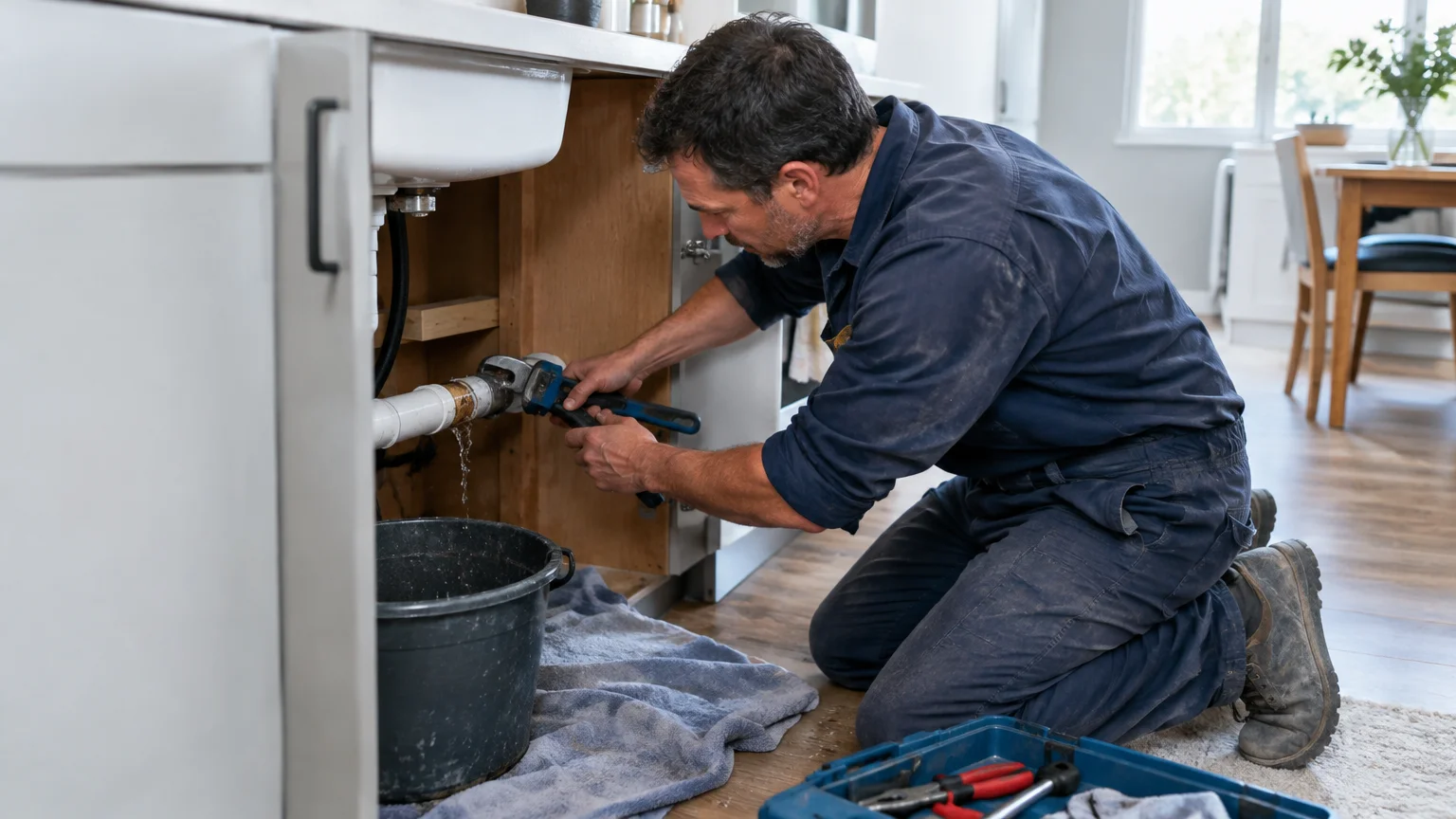
Burst pipe repair in a commercial building starts with safety, water shutoff, and quick damage control. Staff should keep people away from wet areas, protect nearby equipment, and call a qualified plumber. The repair plan depends on the pipe material, break location, access, water damage, and building use.
What should you do when a commercial building has a burst pipe?
The first step is to protect people and stop more water from entering the building. Keep occupants away from standing water, wet floors, sagging ceilings, and exposed wires. If water is near electrical equipment, staff should leave the area and contact the right emergency support.
How to isolate the water supply and protect occupants
Staff should close the nearest shutoff valve when it is safe to reach. If the break cannot be isolated, the main building valve may need to be closed. Large buildings often have separate valves for floors, tenant spaces, restrooms, kitchens, or fire protection systems. Never close a fire sprinkler valve without direction from the building’s fire protection team.
After the water stops, move stock, records, furniture, and electronics away from the affected area. Buckets and towels may help with small amounts of water, but they do not replace proper drying. Property managers should record the damage with notes and photos for owners, insurers, and repair teams.
A burst pipe can affect more than the room where water first appears. Water may move through ceilings, wall spaces, floors, and shared utility areas. Tenants should receive clear updates about access, restrooms, heating, cooling, and business delays.
What information should you give the emergency plumber?
The plumber needs the building address, affected area, property type, and time the leak was found. The manager should explain if the water is shut off and whether electrical equipment, tenant areas, or key operations may be at risk.
Useful details include the pipe location, visible damage, recent cold weather, earlier leaks, building work, and changes in water pressure. A building plan, valve map, or maintenance record can help the plumber work faster. St. Joseph Plumber can help property managers in St. Joseph plan the first response while protecting occupants and building systems.
How is burst pipe damage assessed in a commercial property?
A plumber checks the visible break, hidden pipe sections, water spread, and likely cause before choosing a repair. The review should cover both the plumbing system and building areas that may have received water. This helps prevent a small visible fix from leaving a larger hidden problem.
How plumbers locate the break and determine its cause
The plumber may trace wet surfaces, inspect valves and fittings, test water flow, and check nearby pipe runs. In some buildings, the visible leak is below the true break. Water can move along a pipe, behind a wall, or between floors before it appears.
Common causes include freezing, corrosion, loose joints, damaged fittings, high pressure, poor installation, and physical impact. Frozen pipes can split when trapped water expands. The pipe may then leak when temperatures rise and water pressure returns.
The plumber may use moisture tools to find water hidden behind surfaces. The goal is to limit needless opening of walls or ceilings while still finding the full problem. Pipe tape may help with some threaded connections, but it is not a lasting fix for a cracked pipe or failed joint.
Which building systems and areas require inspection?
Inspection should include rooms below the leak, shared walls, ceiling spaces, mechanical rooms, tenant suites, storage areas, and electrical zones. The plumber may also check nearby drains, valves, pumps, water heaters, and pressure controls. A commercial building can have many connected areas that need review.
Managers should look for damp insulation, soft drywall, stained ceiling tiles, damaged flooring, mold risk, and bad odors. Water removal and building repairs may need separate specialists. Plumbing repair stops the source, but drying and repair of building materials can take more steps.
For managed properties, add the findings to the maintenance record. A clear record can show which section failed, what caused it, and whether nearby sections have a similar age or level of wear. This supports better planning for future building plumbing maintenance.
How is burst pipe repair completed in commercial buildings?
Burst pipe repair often includes isolating the failed section, removing damaged material, installing a sound repair, and testing the system. The work plan must account for pipe condition, building access, tenant needs, and the risk of more water damage. A qualified plumber should confirm that the repaired section holds pressure before normal service returns.
When can a pipe be repaired, and when should it be replaced?
A local repair may work for a clean break in an otherwise sound pipe. Replacement is more likely when the pipe has broad corrosion, repeated failures, damaged supports, poor materials, or several weak joints. A plumber may suggest replacing a larger section when a small patch would leave nearby defects in place.
The right material depends on the current system, building use, water conditions, and local rules. Mixing materials without the right fittings can cause new problems. The plumber should also check pipe supports, insulation, valves, and access panels before closing the work area.
How do access, materials, and building occupancy affect the work?
A pipe in an open mechanical room is easier to reach than one inside a finished wall, ceiling, slab, or tenant space. Work may happen in stages so a business can keep part of its operation open. The manager may need to plan shutdowns, tenant entry, deliveries, and fire safety steps.
The repair plan should explain which areas will be affected, how water service will return, and what testing will occur. It should also list follow-up work, such as insulation replacement, ceiling repairs, or moisture checks. Emergency Plumbing and Leaks & Burst Pipes support may matter when a failure threatens tenant comfort or key operations.
How much does burst pipe repair cost in a commercial building?
The final cost of burst pipe repair varies between buildings and cannot be judged from the visible leak alone. Parts, pipe size, access, water damage, urgency, labor needs, testing, and replacement work all affect the total. Smaller open repairs are usually less involved than work behind walls, below floors, or across occupied areas. The final cost is confirmed on a quote after the site is assessed.
What factors drive the total repair cost?
A small repair in an open area is usually simpler than work behind finished walls or below a floor. Larger systems may need more shutdown planning, stronger fittings, special equipment, or staged repairs. Damage to flooring, ceilings, stock, electrical systems, or tenant spaces can create separate restoration needs.
The cause also matters. One failed fitting may be easier to correct than broad corrosion or repeated freezing. Buildings with poor access, missing valve labels, or old plans may need more checks before work begins. Managers should ask what failed, what will be replaced, what testing is included, and what follow-up work may remain.
How can property managers reduce the risk of recurring pipe failures?
A planned maintenance program can find weak points before they become emergencies. Managers should keep valve maps current, inspect exposed pipes, protect cold areas, and track repeat leaks. Tenants should also know how to report odd sounds, damp spots, low pressure, or sudden temperature changes.
Useful prevention steps include:
- Inspect exposed pipes, joints, valves, and supports during routine building checks.
- Protect plumbing in unheated rooms and areas exposed to cold air.
- Label shutoff valves and keep access paths clear.
- Review repair records for patterns across units, floors, or buildings.
- Schedule professional testing when pressure, corrosion, or repeated leaks cause concern.
Key takeaways
- Shut off water only when the valve is safe to reach.
- Keep people away from wet areas and electrical hazards.
- Inspect hidden spaces because water can travel far from the break.
- Replace damaged sections when a patch would leave weak pipe behind.
- Have the final work and quote confirmed after a professional assessment.
Frequently Asked Questions
What should a property manager do if a pipe bursts overnight?
The manager should protect occupants, isolate the water supply if safe, and contact emergency plumbing support. Staff should move valuable items away from water and avoid electrical hazards. Photos and notes can help the plumber and insurer understand the event. Do not reopen affected areas until they are safe.
How can a plumber find a hidden water leak?
A plumber can trace moisture, inspect pipe routes, test water flow, and check nearby walls, ceilings, floors, and utility spaces. The first wet spot may not be beside the break. Moisture tools and careful access work can help find hidden damage while limiting needless opening of finished surfaces.
Can a commercial pipe be repaired without closing the whole building?
Sometimes, yes. Separate valves may let a plumber isolate one floor, suite, restroom group, or utility branch. The answer depends on the system layout and failed pipe location. A full shutdown may still be needed when the main supply or shared equipment is affected.
When should a burst pipe be replaced instead of patched?
Replacement is often better when the pipe shows broad corrosion, repeated failures, several damaged joints, or poor past repairs. The plumber should inspect nearby sections before choosing a solution. A local patch may work for one isolated failure, but it may not solve a wider system problem.
Conclusion
Fast action limits water loss, but lasting protection needs more than stopping the first leak. A full assessment can find hidden damage, weak pipe sections, and building conditions that caused the failure. St. Joseph Plumber helps property owners and managers make clear choices about emergency repairs, planned replacement, and ongoing plumbing needs in St. Joseph. Contact us to discuss burst pipe repair for a commercial building in the St. Joseph area.