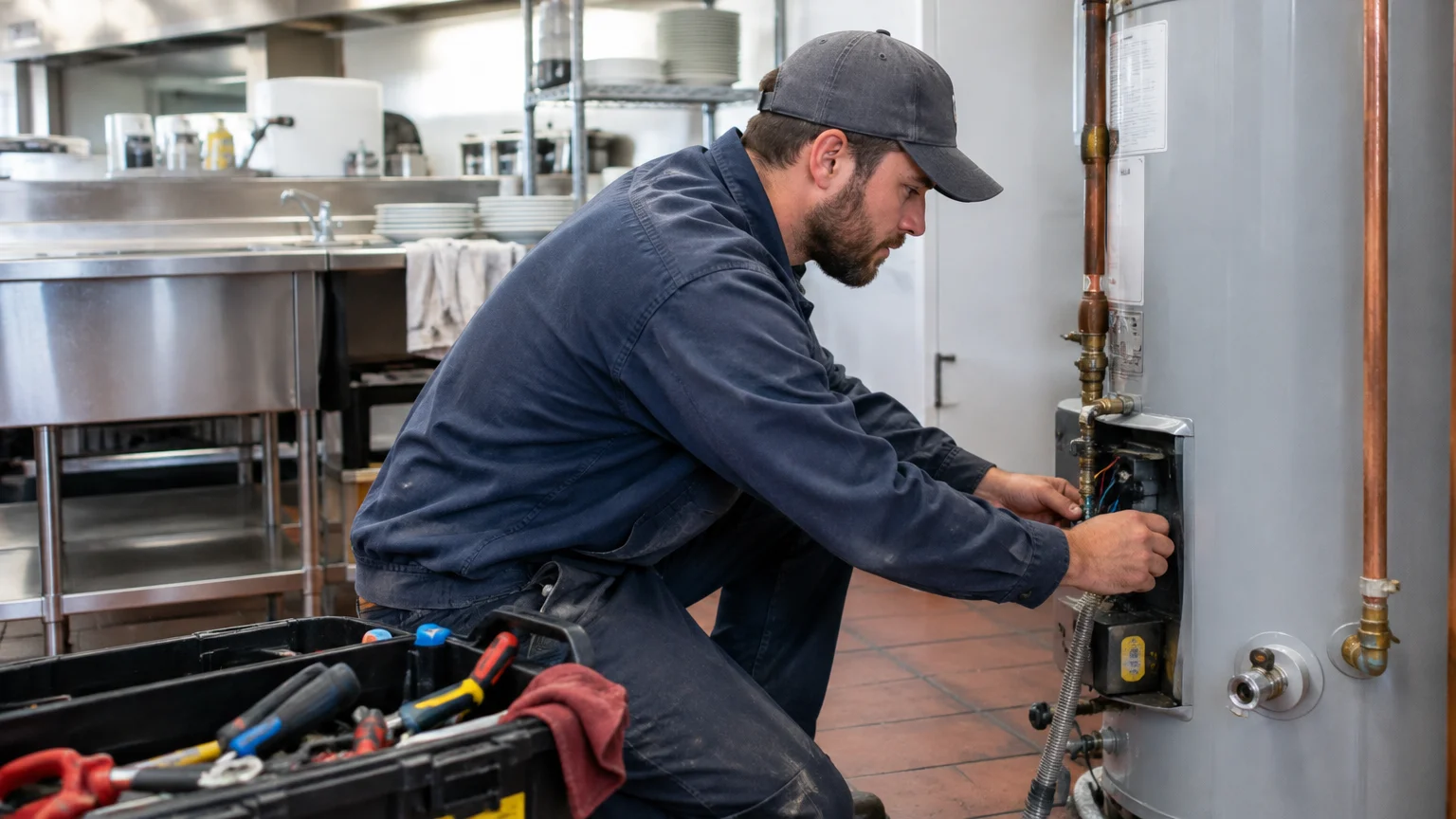
No hot water at a business can come from a failed heater, lost power, gas trouble, a closed valve, or heavy use. Safe visual checks may show where the problem starts. Gas leaks, electrical faults, water leaks, and commercial heater problems need prompt help from a qualified plumber.
Why is there no hot water at a business?
No hot water at a business often points to a water heater, its fuel supply, or the pipes that carry heated water. The unit may lose power, fail to light, trip a safety control, or have a damaged heating part. A closed valve may also stop hot water from reaching sinks, showers, or kitchen fixtures.
Commercial water heaters work harder than most home units. Restaurants, offices, hotels, medical sites, schools, and stores may have many fixtures running at once. A busy morning can empty a storage tank before it has time to heat more water. An older or small unit may also struggle after a business adds staff, customers, restrooms, or equipment.
What water heater problems can cause a loss of hot water?
Common causes include a failed heating element, bad thermostat, faulty burner, blocked vent, failed ignition system, or damaged control board. Sediment may build up inside a tank and reduce heat transfer. Rust can harm the tank, fittings, or anode rod. An anode rod is a metal part that helps protect the tank from rust.
Tankless systems may lose hot water when the flow sensor, heat exchanger, filter, or power supply fails. The unit may also shut down when several fixtures need more water than its rated flow. Tankless water heater installation should match the building’s busiest use, fuel type, venting needs, and electrical service.
Could the problem be in the business plumbing?
Yes. A failed mixing valve, blocked pipe, broken recirculation pump, or crossed hot and cold connection can affect many fixtures. A mixing valve blends hot and cold water to help control the water temperature. When it fails, water may stay cool even while the heater works.
One fixture may have its own problem, such as a worn cartridge or blocked aerator. If every sink and restroom has the same issue, the heater, main hot water pipe, controls, or recirculation system needs attention. St. Joseph Plumber can help businesses in St. Joseph tell the difference between a fixture problem and a wider system failure.
What should you check when a commercial water heater stops working?
A business owner or manager can make a few safe visual checks before service. First, find out whether the problem affects one fixture or the whole building. Staff should also think about any recent power outage, building shutdown, renovation, or plumbing repair that may have changed the system.
Which checks are safe for staff to perform?
Staff may make these checks without removing covers or touching inner parts:
- Check nearby hot water taps to see if they have the same problem.
- Look for a tripped breaker without opening the water heater.
- Read any error message shown on a visible control.
- Look for water near the tank, valves, or floor.
- Check that obvious shutoff valves are still open.
- Note strange sounds, smells, smoke, or changes in water color.
A business should not keep resetting a breaker or safety control. Staff should not remove electrical panels, change gas controls, relight equipment without clear maker instructions, or bypass a safety device. These steps can cause fire, electric shock, burns, or more equipment damage.
What should staff do if they smell gas?
If staff smell gas, they should leave the building and keep others away. They should not use switches, phones inside the building, flames, or anything else that may make a spark. Once outside, they should contact the gas utility or emergency services as local safety guidance directs. A qualified professional should inspect the system before normal use begins again.
A leak needs quick action even when there is little or no smell. Water can harm walls, floors, stock, equipment, and electrical systems. Leaks and Burst Pipes service may help when water comes from supply lines or nearby plumbing instead of the heater. Drain cleaning may also be needed when a blocked drain causes water to back up near business fixtures.
When should a business repair or replace its water heater?
Repair may work when the tank is sound and the problem involves a replaceable part. Examples include a thermostat, heating element, ignition part, valve, sensor, anode rod, or control. Repair can restore steady service when the unit has enough capacity and does not have major rust.
Replacement is more likely when the tank leaks, the unit has heavy rust, parts are no longer available, or the same failure keeps coming back. A business may also need a new system after changes in staff, opening hours, restroom use, or production needs. The right choice depends on the unit’s condition, size, fuel, venting, controls, and expected use.
When is water heater replacement a better choice?
Replacement may be the better choice when the old unit cannot handle busy periods or has damage that may cause more downtime. A professional can compare a storage tank with a tankless system. Storage tanks keep heated water ready to use. Tankless systems heat water as it flows, but they still need the right size and proper power or fuel service.
A replacement plan should consider recovery time, fixtures used at once, space, venting, drainage, water pressure, and local code rules. Commercial sites may need special controls, larger tanks, or a recirculation loop. Water Heater Installation should be completed by a qualified professional who can check each connection and confirm safe operation.
How can a business choose the right service provider?
A business should seek a plumbing company that works with commercial water heaters and understands restroom use. The provider should explain the likely cause, point out safety risks, and say whether repair or replacement makes sense. The business should receive a written quote before approved work starts, with the work and equipment clearly listed.
Local results may show many plumbing businesses near me, but location alone does not prove commercial experience. A business should review licensing rules, insurance, service coverage, and past work with the type of heater installed. St. Joseph Plumber serves customers in St. Joseph and can help property owners choose the next step for their building.
How can a business restore hot water and prevent repeat problems?
Professional service usually begins with a full system check. The plumber may test power, fuel, controls, water temperature, pressure, valves, venting, tank condition, and connected fixtures. The review should also consider demand during busy periods, not only how the heater works when the building is quiet.
A technician may repair a failed part, clear a safe blockage, replace a valve, restore a connection, or suggest a suitable new unit. If water damage is present, the business may need urgent plumbing help before heater work is finished. The main goal is a safe diagnosis and a steady return of hot water.
What maintenance helps commercial restrooms and heaters?
A written maintenance plan can help prevent sudden shutdowns. It should follow the maker’s instructions and match how the building is used. Staff can report small changes early instead of waiting for a total failure.
Useful planning steps include:
- Check for damp spots, rust, drips, and strange sounds.
- Watch for slow recovery or changes in water temperature.
- Keep space around the heater clear for safe service.
- Test restroom fixtures for leaks and weak shutoff action.
- Schedule professional checks of controls, valves, and connections.
- Record repairs, error codes, shutdowns, and changes in demand.
Simple upkeep is safe for staff when it only involves looking and reporting. Internal repairs, gas work, electrical work, venting, pressure concerns, and tank replacement belong to a qualified professional. The same rule applies to a water heater that serves many restrooms or key business operations.
Key takeaways
- A failed heater is only one possible cause of lost hot water.
- Heavy use can reveal a sizing or recovery problem.
- Staff can make visual checks but should not open the equipment.
- Gas smells, active leaks, and electrical faults need urgent care.
- Repair or replacement depends on safety, condition, capacity, and reliability.
Frequently Asked Questions
How do you check for gas leaks near a water heater?
Staff should not test a suspected gas leak with a flame or electrical device. If gas is smelled, everyone should leave the building and avoid making sparks. From a safe place, contact the gas utility or emergency services as directed. A qualified plumber or gas professional should inspect and approve the system before use.
Can a running toilet cause a business to lose hot water?
A running toilet does not usually stop a water heater from making hot water. It can waste water and add demand to the building’s plumbing. A blocked pipe, failed mixing valve, or pressure problem may affect both restrooms and hot water. Each possible cause should be checked separately.
Is tankless water heater installation right for a business?
Tankless water heater installation may suit a business with the right demand pattern, power or gas supply, venting, and space. It does not always solve a low-capacity problem. A professional must size the system for peak flow and check whether several fixtures may run together.
Should a business call a plumber for water heater repair?
A business should call a plumber for water heater repair when the unit serves many fixtures, stops working often, leaks, shows an error, or involves gas or electrical parts. Staff can report symptoms and make safe visual checks. They should not remove panels, bypass controls, or attempt inner repairs.
Conclusion
No hot water at a business may result from a control issue, heavy use, a plumbing fault, or a failing commercial heater. Safe checks can narrow the problem, but trained diagnosis matters when the system involves gas, power, leaks, pressure, or many restrooms. Contact us to arrange help from St. Joseph Plumber for a commercial water heater or restroom plumbing concern in St. Joseph.